I'd been contemplating it, well, basically since I arrived. And today I did it - I changed my plane ticket to stay longer!
Instead of December, I'll now be back in Canada March 2nd.
I had been hoping to stay even longer, but word to the wise: cheap plane tickets have a ton of restrictions on changes of any kind. Mine turned out to only be valid for six months after the initial date of travel. Alas.
So I won't have a white Christmas. But I won't have a -35C February either. You win some, you lose some.
Monday, November 27, 2006

Sunday, November 26, 2006
Balkanika Sounds and Mataderos
One of my English students tipped me off to a monthly event featuring Eastern European music, more specifially the Balkan gypsy brass band style popularized by Kusturica in his films. I assumed he meant live music, and so a friend and I made our way up to the huge old theatre-cum-bar where the show was to take place. We got there early (1am!) to beat the crowd, and were excited as the band took the stage. Until they started to play... ska and reggae. They were actually a great band, and the crowd was going wild. But Jamaica's a far way from Yugoslavia.
They finished their set and then the DJ came on between bands. Or so we thought. It actually turned out to be a DJ night called Balkanika Sounds, where the DJ spun Eastern European tunes, some with a nice techno beat underneath, others danceable by simply by virtue of their pulsating tuba bass line and horn sections. The place was packed and people were going crazy. It was actually surreal looking down from the balcony on a packed dancefloor of people doing their best drunken rendition of the kind of dances that accompany this music. It was like some kind of mad, out of control bar mitzvah. I've never seen anything like it.
We made for the door at around 5, and things were still going strong. I've been told that Balkan music is hot with a certain subset of in-the-know young porteños. Kusturica himself makes it here every so often for a couple of sold-out shows, and I guess the Balkanika Sounds nights used to happen at smaller bars, but they got so popular they've moved to bigger venues.
Isn't this a cool quote?
In reference to travel in the age of globalization, the writer Jonathan Raban once remarked, "Old travellers grumpily complain that travel is now dead and that the world is a suburb. They are quite wrong. Lulled by familiar resemblances between all the unimportant things, they miss the brute differences in everything of importance."
Fuerza Bruta and Air Condition
Last night, on the recommendation of a friend, one of my classmates and I went to check out a show called Fuerza Bruta. I was under the impression it was a theatre piece, though a look at their sexy Flash-heavy website didn't really clarify for me what it was supposed to be about. I just followed my friend's word and went anyway.
We got there and were led into this huge tent. There were no chairs, and no visible stage. As the show started someone came over the loudspeaker and informed us that we, as the audience, were too part of the show.
The show turned out to be something akin to this young, urban, multi-disciplinary, multi-media, interactive Cirque de Soleil-ish theatre/dance piece. The action happened on all sides, in the middle of the crowd, hanging from the ceiling. People were hanging from harnesses from the walls, actors came out into the middle of the crowd on these huge conveyor belt machines, there was a huge plexiglass aquarium filled with water and 4 jumping and writhing actors suspended from the ceiling, that was eventually lowered low enough for you to touch it. Crazy light effects, blasting techno music, wind and water machines, fake blood, paper and powder released intot he air. And every so often the action would turn into a spontaneous rave dance party for a couple of minutes. It was awesome.
In some ways it reminded me of this aerial dance show, Air Condition, that I saw a couple of weeks ago. It was seriously one of the coolest things I've ever seen. It was a collection of short pieces, all involving dancer in harnesses, whether suspended from the ceiling, from the vertical wall at the back of the stage, or their movements being controlled by riggers off-stage controlling the length of their harness over the course of a jump. The lights, costumes, video projections and live music by a three piece band were all great, and integral to contributing to the atmospheres that each piece created. One exceptional piece was a kind of modern, messed-up, gravity defying, modern of the tango.
The cool thing about aerial dance is that it multiplies the physical capabilites of the dancer by 10. So for example, instead of just doing a normal jump, if they have a harness on they jump up, the rigger hauls on the other enfd of the harness from backstage, the dancer glides gracefully through the air and lands on the other side of the stage, completely defying gravity. But instead of being simple show of acrobatics, the harnesses are used in an artistic way, to increase the repertoire of movements the dancer can use to express what the choreographer wants them to express.
Both the American friend who I went to see the show with and I remarked how there's so much awesome, creative, cutting-edge, multi-disciplinary theatre, dance and music going on in this city. Whacked-out shit, that takes risks, and really succeeds. I really think if you wanted to see a straight-ahead traditional production of a classic play in Buenos Aires you'd be hard pressed. I don't know why it is - maybe as opposed to some first-world North American or European cities, Buenos Aires, being on the periphery of the scene as far as some are concerned, has nothing to lose in taking risks. So they do so, and audiences are used to it, and enjoy and support what comes out of this risk-taking.
Thursday, November 23, 2006
La Viruta
So, last weekend my friend Isabelle Montreal was here. We decided her visit to Bs As wouldn't be complete without a little tango dancing. We went to this place called La Viruta, which is in the basement of the Armenian Cultural Centre (go figure.) La Viruta is famous for it's mix of old and young, foreigners and Argentines, dressed up and dressed down. It's like a big hall, where they have different types of dancing - salsa, tango, swing, folk. Each night they feature two styles and they offer lessons at all different levels earlier on in the evening. Sundays are tango and swing.
We got there just in time for the teachers' tango demonstration before the class started. It was cool, the teachers were all dressed casually, in jeans, with one guy even wearing those horrible pleated waist, tapered leg, plaid weightlifter-style jogging pants. A far cry from fishnets and fedoras. But dancing tango like we all know it, dramatic, and intense.
We joined the group for absolute beginners. There were actually a fair number of Argentines in the group, which surprised me. Unlike salsa or something that lots of Latin Americans grow up dancing at family parties from the time they can walk, tango's not something just anyone knows.
And it actually wasn't that hard! Well, the basic step, anyway. Like salsa, it's way easier for the woman than the man. They have to lead - all we have to do is follow. It was really fun, and I was glad to finally have tried tango, which is so essentially Buenos Aires. I'll be going back soon.
Wednesday, November 22, 2006
Maté!
 Before coming to Argentina, I already knew a little bit about maté. It's a type of loose herbal tea made from a plant grown in southern Brazil and Paraguay. It's really popular here in Argentina and also in Uruguay. You drink it out of a special gourd-type cup using a metal straw that filters the infusion on the way up. It's supposed to have all these great qualities; it has a type of caffeine that has all the energy-giving properties of that found in coffee, without the jitters and buzz; it's supposed to be good for the digestion too.
But I didn't realize just how important a role maté plays in Argentine society until I got here. First of all, EVERYONE drinks it. Old, young, men, women, upper class, lower class, maté is
 present in every level of society. And it's as much about the drink as it is about the ritual of drinking it. There's a whole social etiquette surrounding maté. The server pours the boiling water into the gourd, and then passes it to everyone in the group. Each person sips out of the same straw, and the server refills the gourd with water as each person finishes. It's a social thing; you wouldn't think of just drinking your gourd of mate yourself if there are others present. ( Check out the cheezy photo...)
And people drink maté ALL THE TIME. Everywhere. People walk around with thermoses of hot water in their bags, along with a container of loose mate, and the gourd and straw. You can fill up your thermos in many restaurants for a small charge, and there's even these guys that wander around on the streets with carts with containers of hot water that will fill up your thermos.
And if you always have your maté with you, you can have a little tea party virtually anywhere. When I was hiking near Córdoba, when we got to the lookoff at the end of the trail, one of my fellow hikers whipped out her thermos and we had some maté to warm up. When you walk through the park on a Sunday afternoon, families are sitting around under a tree passing the maté gourd around. You see truck drivers drinking maté at red lights, office workers with their maté on their desk.
I really think we should import this habit back to Canada. I mean, really. It barely snows here outside of the deep south. 5 degrees is considered really cold. Why aren't we the ones constantly equipped for instant access to a hot, stimulating beverage? I urge you, Canada, to start a hot beverage revolution.
Monday, November 20, 2006
Going from traveller to normal person
As I'm sure anyone who reads this blog has been noticing, the frequency of my posts has gone down since I got here to Buenos Aires. As opposed to the action-packed, here today, gone tomorrow itinerary one keeps while backpacking, I'm here in Bs As for a longer period of time. You get into your little routines of school, work, buying groceries at the grovery store and doing laundry and though you never stop exploring and experiencing new things, they may be a little less noteworthy. Like, yeah it's weird how you can buy yogurt in a bag here ( seriously, like a litre bag of yogurt, just like your litre bags of milk) but I don't know if I could pontificate a whole essay on it. ( Hmmm, actually, maybe I could...)
But it's sort of cool staying somewhere long enough to get into a routine. For me that's sort of the point of going somewhere for longer than a couple days or a week. Routine means repetition and by extension familiarity. And it's that familiarity with a new place and culture, even if it's with the most mundane things, that makes me feel like I've really been there. I could come to Buenos Aires for a week and take some pictures of the Obelisco and then leave; but when I'm riding the subway in the morning with all the commuters to get to my 8am English class I'm doing the exact same thing as countless other porteños across the city and so I feel like I've gotten closer to the city than just seeing the tourist sights. Not saying I've necessarily gotten closer than someone who just makes the rounds of the tourist sights, but I feel like I have.
But it's sort of cool staying somewhere long enough to get into a routine. For me that's sort of the point of going somewhere for longer than a couple days or a week. Routine means repetition and by extension familiarity. And it's that familiarity with a new place and culture, even if it's with the most mundane things, that makes me feel like I've really been there. I could come to Buenos Aires for a week and take some pictures of the Obelisco and then leave; but when I'm riding the subway in the morning with all the commuters to get to my 8am English class I'm doing the exact same thing as countless other porteños across the city and so I feel like I've gotten closer to the city than just seeing the tourist sights. Not saying I've necessarily gotten closer than someone who just makes the rounds of the tourist sights, but I feel like I have.
Friday, November 17, 2006
Tango
My friend Isabelle from Montreal is in town for a conference. She's staying with an Argentine friend, and when she asked him the other night to take her out to take in some typical Buenos Aires tango, he knew exactly the place.
So we all went out to Lo de Roberto, or Roberto's Place, in the Almagro district. It's this tiny café/bar decorated up old-school; high ceilings, the walls lined with shelves of bottles and vials right up to the top behind the bar, crumbling brick walls and bookshelves filled with yellowing volumes. Wooden tables arranged hapahazardly. And tango is their speciality. Not the dancing kind, the singing kind. Isabelle's friend Ariel told us that in Buenos Aires until recently tango was considered music for old folks, and only in the last 5 years have young people really started reviving it, learning the songs and going to shows. And Lo de Roberto is one of the places young people go to hear tango.
A casually dressed young pair were performing when I arrived, him on guitar and her on vocals. Unmiked, of course, as the place was so small amplification would have been overkill. Every so often someone random from the crowd would get up and join them - a harmonica player, a guest vocalist, whoever was in the crowd.
But at about 1am the veterans came out. A pair of old guy took the stage, each with a guitar, a set of vocals chords, and a head full of the tango melodies they must have grown up playing. Each had their own distinct vocal style, but they were both really good. The had the full attention of the crowd, who themselves would sing along to the more famous melodies, or let out a shout or yell at an appropriate moment.
What was cool about everyone who performed was that they looked like they could literally be Joe Blow off the street, dressed in jeans, even track pants and mullets ( I swear I've seen one of the singers at a hockey game in Longueuil...) But as soon as they started performing it was clear that this was no accident, they were INTO this music.
And now that we've heard some tango, it's time to dance it. I've been told Sunday nights at a certain bar in Palermo are a good place to learn. To be continued...
Tuesday, November 14, 2006
Día de la tradición
 In San Antonion de Areco, a small town about 2 hours from Buenos Aires, the 10th of November of every year is a festival called Día de la Tradición. What's traditional about this festival is that it's a celebration of the gaucho culture.
Gauchos are like Argentinian cowboys. Similar to American cowboys in that they played a vital role in settling and building up the desolate open spaces of both the US and Argentinian pampa. Gauchos are mythical figures for the Argentines, representing ideals of simple, hardworking, down-to-earth people, but who are known to give in to the pleasures of the drink or a knife fight at the local pulpería ( the typical bars that dotted the pampa). They work hard and they play hard.
 Día de la Tradición consists of a horseback parade or procession through the town, everyone in full gaucho gear, of course. Then it's out to the park on the outskirts of town for rodeo competitions, folk music, asado or barbeque, and a day in the sun with the family.
Me and my Chilean friend Alejandro arrived at the bus terminal just in time to miss the 11am bus to Areco. Actually, maybe we timed it perfectly to have a long, leisurely coffee at the station before getting on the 1pm.
We got to Areco in the heat of afternoon. The town is really pretty, peaceful and quiet. Lots of historic old architecture. We wandered around, getting slightly lost a couple of times before finally finding the rodeo. ( You wouldn't think it would be that hard to find a rodeo in a small town, now would you... but it was.) We headed straight to the barbeque table, getting a couple of huge glasses of beer and some choripan, barbequed sausage on fresh bread.
And then we just did as everyone else was doing. Got out of the sun under a tree, and watched gauchos ride around on horses. The most interesting sport was one where they'd put a guy on this wild horse, then hit the horse and it would start bucking and trying to throw the guy off. The one who stays on longest wins. Every time the horse would throw the guy off, it would go sprinting toward the crowd, and then veer away at the last second.
In between sets of rodeo, they'd put on folk music over the loud speaker, which was neat. Alejandro shared with me the details of the huaso tradition in Chile. These Chilean cowboys have something in common with Gauchos, because of their similar colonial history, but they're not quite the same. We also had a lot of fun observing all the people decked out in gaucho gear, and judging who made the most convincing cowboy.
The bus ride back to the city took an hour longer than usual, what with all the sunday evening traffic of cottagers and vacations trying to get back to Buenos Aires. We'd been joking all afternoon that we'd wanted to steal some gauchos horse and ride back to the city. Sitting in a traffic jam at 9pm on a Sunday night we were thinking that that may have actually been a good idea....
Mania de peitao
"Mania de peitao" is a song by the Brazilian singer Seu Jorge. Peitao means chest in Portuguese. The only other word I can decipher in the chorus of the song is silicone. But I think that's enough to figure out what the song's about, eh?
Though he's from the country next door, Seu Jorge could be singing about Argentina. The plastic surgery industry here is HUGE. Combine a devalued currency, a public health system and a high concentration of doctors and surgeons and you've got people from all over the Americas booking "plastic surgery vacations" to Argentina.
No really. You can get implants or face lifts here even in a private hospital for a fraction of the price you'd pay in Chile or the US. For an American it costs less to fly here, stay here for a week and pay for your operation in pesos than it does to get your nip and tuck in a private hospital in the States. And people do it all the time. Browse through the in-flight magazines on flights arriving into Argentina and they're full of ads telling you to " Take home the you you've always wanted."
Newspapers and magazines are full of ads for plastic surgery, complete with prices. I have no idea how much a facelift costs in Canada, but here how much these procedures cost here is common knowledge.
They say that the quality of the plastic surgery here is quite good, as well. Though you'd be forgiven for thinking differently after watching a bit of Argentine TV. The Argentine version of "Dancing with the Stars" is full of has-been actors that would probably look fine without the peroxide dye jobs and the silicon boobs as big as their heads.
(But then again, it's not like the American version of "Dancing with the Stars" is an example of natural beauty either...)
Thursday, November 09, 2006
Politically Correct
There are presidential elections in Argentina in 2007. No one told me this or anything. But it's a fact impossible to ignore when travelling around this country. Along highways and roadways all over Argentina, any flat surface, from overpass to fence to brick wall, gets hijacked into a political billboard. Nothing more complicated than simple hand-painted notices telling you to vote for so-and-so, vaunting a certain politician's partnership with another, or a one sentence resume of a candidate's platform. I'm not sure if they're officially sanctioned, or if they're the work of Juan P. Party-Supporter, but they're impossible to ignore.
The Argentine people's interest and participation in politics makes me more than a bit emabarassed of the apathy surrounding Canadian politics. When was the last time you saw such anticipation of Canadian elections? And what was the rate of participation in the Canadian elections last January, like 30%? ( And if you look at the numbers for the percentage of young people that vote, it's even lower...)
Here in Argentina, voter turnout is VERY high. It's illegal not to vote, and you can be fined if you don't. But I don't think the high turn out at elections is due to any law. (On the contrary, when Argentines want to ignore any given law, such as traffic laws for example, they don't think twice about doing so...) There's just a wide-spread interest, awareness and knowledge of national politics. It's not a taboo subject, and anyone is happy do go into details of their political opinions should you ask.
Some argue that in a relatively prosperous country like Canada, for the vast majority life stays comfortable no matter who's in office. So people lose interest - the outcome of the elections doesn't effect them. Or that in Canada younger voters or those from lower social classes or more marginalized segments of society (who also have a lower rate of turnout at the polls) don't feel like politicians listen to them or take their interests into account. They become disenfranchised, and just don't participate in the political process.
But here in Argentina you have a country, where if you follow this logic of disenfranchisement, NO ONE should want to participate. Here's a country where they've lived under a military dictatorship, and even to this day under the democratic system politics are full of scandal and corruption definitely exists. Where stories of exploitation and widespread economic hardship are impossible to ignore. Where the disparity between rich and poor can be downright vulgar. And where politicians have made major decisions that have had huge repercussions on the people of the country.
But Argentines don't back away from the democratic process. The streets are still covered in posters and flyers, impromptu murals get painted on brick walls, people travel huge distances to vote, and downtown traffic is disrupted practically everyday by some protest or another.
I wonder what would it take to get Canadians to display this much interest in politics...
Tuesday, November 07, 2006
Busy!
I've been busy these last days. I sent out my resume to a bunch of language institutes, trying to pick up a bit of work as an English teacher. I've had a couple of interviews, and have a couple more at the end of this week.
My first interview was last Friday. I took the commuter train out into the suburbs to meet the director of a school.
Now, in Canada, suburb usually equals affluent, as compared to the more rundown centres of a lot of cities. But here, though there are well-off suburbs, many lower and middle class folk simply can't afford to live in the city, but that's where all the work is. So they live north of the city and take the train in each day. The particular train I had to take Friday has a bad reputation, as it goes through a bunch of neighbourhoods many would label unsavoury. As many did; I asked a few different Argentine friends about the train and they all warned me, don't take much money, keep an even closer eye on your bag than you usually do, don't talk to anyone, don't use your cell phone because someone will grab it out of your hand, don't sit in the cars at the ends of the train. One friend even offered to accompany me.
I took all the precautions, and in the end the ride was fine. And it was interesting for me to see the way that, like it or not, the vast majority of the citizens of Buenos Aires actually live. It's easy to forget, living on the edge of Barrio Norte/Recoleta, that it's really only a small minority of people that can afford to shop at the boutiques on Avenida Santa Fe a block from my place. And travelling by train, as opposed to road, in any country, is great. Roads are the main arteries of the modern city. But train tracks go through people's back yards and woods and through nooks and crannies and out of the way areas. Whether it's the seedy underbelly or an idyllic hidden green space, on the train you get to see more than simple storefronts and housing facades.
So, I get of the train, and go for the interview in...a Burger King! It was seriously, the best interview ever. The director of the institute, and American woman who's lived here for 10 years, met me in jeans...with her Argentine husband and her 9-month old baby. They were like, "If the baby likes you, then you've got the job." So I frigging summoned all my baby-pleasing skills and as soon as you know it, he's smiling at me and giggling and trying to hold my hand. and they're like, " Oh my god, he loves you! You'll be such a good mother someday! Oh my god!" Oh yeah, and then we talked about, like, my resume and experience for a sec. After they went on about how much they love everyone from Nova Scotia.
And then she gave me a bunch of classes. I had my first one this morning! I had actually forgotten I how much I liked teaching English. The student I had this morning works in this uber-chic, hip, expensive hotel in PuertoMadero that is in a converted factory. She's going to give me a tour next week!
Gotta go prepare tomorrow's class!
Thursday, November 02, 2006
Mercedes Sosa
Seeing Mercedes Sosa live would be great. Seeing Mercedes Sosa live in Argentina would be even better. Seeing her live at the Teatro Colon? Amazing. And seeing her live at the Colon in the last concert before the theatre closes for a year of repairs? Oh my god. And that's what we did last night.
Mercedes Sosa is an Argentinian singer, famous around the world and beloved in Argentina for her interpretations of Argentinian folk music, nueva canción, and collaboration with some of the most important artists in Latin America. She has a huge, rich alto voice and a unique interpretive style.
A group of us, Stefan and Patricia from Germany, Marie-Christine from Quebec, Cameron from Chigago, Martin from Northern Argentina and me, got $4 standing room tickets for Mercedes Sosa's concert last night at the Teatro Colón. We got there early, knowing what an occasion the sold-out show would be.
She's in her 70's and has had heart and hip problems, so she did the whole show seated. this didn't effect her stage presence and musical command one bit, though. Her huge voice filled the Colón.
She was accompanied for the first half of the show by a small ensemble of piano, bass, and drums, with some guest musicians on guitar, bandoneón, and guest vocals for certain songs. For the second half of the show the Orquesta Simfonica del Teatro Colón joined her on stage. Though the musicians' performances and arrangements in the first half were great, I thought the power and sound of an orchestra to be a more adequate support for Mercedes Sosa's tremendous voice.
The show was awesome. She sang a wide variety of repertoire, from a couple of folkloric chacateras from her native province of Tucumán, to a song by Silvio Rodriguez and one by Astor Piazzolla. And everyone in the sold out hall was so into it.
As she precariously stood up and performed the last verse of the last song of the show standing, the crowd followed her lead, and the house went wild with applause, whistles, and bravos. And I thought the applause after the opera was wild; it was nothing compared to the sold-out house's appreciation of one of the country's most beloved and respected musicians. As she and the orchestra left the stage after the encore, everyone continued to clap and sing, wanting more. As the woman beside me commented, "I'd stay here till 3 in the morning if there was the possibility she'd come back out and do another song!"
What a show. Some of our group knew Mercedes Sosa only by name, one girl had never even heard of her at all. Buit everyone was totally moved by the concert.
And now the Teatro Colón's closed. They're renovating it and the theatre will reopen in 2008, in time for its 100th anniversary celebrations.
Monday, October 30, 2006
Uh...Halloween
 This is a post on the phenomenon of Hallowe'en, or rather, the lack thereof, in Buenos Aires. (Really, though, it's just an excuse to post this picture of my brother Mark dressed up as Bill Cosby for Hallowe'en. )
Hallowe'en doesn't really exist here. The only places I've seen with orange and black decorations are American chain restaurants. The only people that have Hallowe'en parties are ex-pats. And it's Spring here, so all the Hallowe'en related stuff is just so out of context.
Speaking of American chain restaurants, yesteday I was walking around Puerto Madero, the chic, new, slick, upscale neighbourhood that has recently been developed in what used to be the industrial port. It's pretty nice; there's all these fancy restaurants along the water in what used to be old warehouses. But, thrown in amongst all these fancy places are some random American chains, like TGI Fridays and frigging HOOTERS, pretending to be all fancy and stuff. And since no one here knows that these places aren't indeed fancy in their American incarnations, and get dressed up to go there, they effectively become fancy. Strange.
But, HOOTERS? I explained to the Argentinian friend I was with what the concept is and what the name refers to, and he was like, "So the waitresses just wear tight shirts and stuff? Like, what's the big deal? So does everyone in the street. Is the food good?"
Saturday, October 28, 2006
I think this would be illegal in Canada
So last night I'm having a drink with a friend, sitting on the outdoor terrasse of a bar. We were in a part of Palermo Soho where there's like a mini-rotary with a little plaza and a playground in the middle, and all around it are bars and restaurants, most of which have patios out on the street.
Over the course of the evening several people approached our table - people selling everything from glow in the dark headbands to homemade scented massage oil to kids asking for change. So when this woman came up to our table and tipped an open pack of cigarettes toward us and asked if we wanted one, we were like, "No, thanks.." assuming she was selling them.
But then a closer look at her flourescent blue spandex pants and sequined jacket and purse, all emblazoned with the Pall Mall logo, clued us in. She worked for the Pall Mall Cigarette company, and as a promotion for their new Light brand or something, they were going to bars and giving away free cigarettes, getting people to try the new brand. After you took the cigarette and tried it, another Pall Mall girl came around with a survey, asking you what you thought of it, and asking for your name and address, so they could send you invites to special events, or something like that. Uh...yeah.
Pretty friggin' sketch, eh?
Thursday, October 26, 2006
Madres de la Plaza de Mayo
 I just came back from the Plaza de Mayo, one of the main squares in downtown Bs As. Every Thursday at 3:30pm, a group called the Madres de la Plaza de Mayo take over the square with a political march.
In a nutshell, the group came about during the dictatorship, when the mothers of men and women who had mysteriously "disappeared" in the middle of the night decided to take action. They started regularly protesting, demanding justice and the safe return of their children, in the Plaza de Mayo, white kerchiefs the "uniform" of their ranks. Since the dictatorship ended, the group has continued to be active in various social justice and human rights related causes.
The Madres are very well respected and are famous around the world. Their weekly march is, I learned today, a big tourist attraction. There were tons of foreigners there with digital cameras, filming, or just taking in the march.
But I felt mixed feelings watching the march today. On one hand, the fact that so many tourists are interested by the Madres, a political group fighting for social justice, is a good thing. Ideally learning about the Madres, snapping their picture, and taking that story back to your home country helps promote their cause - it's not the same kind of tourist attraction as the Recoleta Craft Fair or the beach at Mar del Plata.
But it was sort of weird. The Madres silently circle the statue in the centre of the Plaza. And there's tourists with their cameras everywhere; people taking pictures from afar, people walking backwards in front of the group to take a shot from the front, people going up amongst the women and taking pictures from there... One girl standing at the little table the Madres have set up with pamphlets and things, right in the woman's face with her digital camera, not taking a pamphlet or talking to her, but simply capturing her "quaint kerchiefed-ness" on film. And everyone else is standing around the plaza, just watching them walk.
Now, it's not meant to be a loud protest, and I don't even know how it's seen to just join into the march. But it still seemed really strange to me that everyone's standing around casually snapping pictures of these women and this march whose movement has deep roots in the dirty past of this country and is heavy with signification.
The whole scene just struck me as sort of weird. Are the Madres really no more than some kind of tourist attraction?
Tuesday, October 24, 2006
Teatro Colon
 Could you imagine a group of Canadian elementary schoolchildren being taken to an opera house as a school trip? So important is the Teatro Colón in the history and cultural life of Buenos Aires that every time I go past there are at least a couple busses full of students or tour groups waiting to go in for a tour.
Mussorsgky's opera Boris Godunov opened last week, and so I thought it a good excuse to check out this landmark, not only because it's the last opera of the season, but that at the end of the season the Colón closes one year for repairs.
Waiting in the huge line to get a ticket didn't bother me - seeing so many people interested in c
 lassical music was a nice change from all those concerts I've been too where the audience consisted of 5 old ladies knitting in the back. But the guy at the box office told me the only tickets left for this Sunday's matinée were crap seats where I wouldn't see anything. So I decided to go for an entrada a pie, a $4 ticket in the standing section at the back of each of the three upper balconies.
Sunday afternoon I scrounged together something resembling "nice" from my collection of backpacker clothes and made my way to the theatre. As I climbed the stairs and entered the Cazuela level, I realized how much of a standing section novice I was. The best standing spots, at the centre back, had been claimed by people who had obviously arrived WAY earlier than I did, and who were fully equipped with little chairs and stools. I duly took my place at the end of the row, on the side.
As the show started, I fidgeted around, trying to see around unfortunately placed posts and peoples heads, and trying to take in both the stage and the Spanish supertitles of the Russian text at the same time. A decorative moulding hanging from the ceiling which must look quite lovely, but which partially blocked my view, meant that I had assume a stooped over position. ( Of course, this wasn't an issue for all the other petite Argentine ladies in the section. This must have been punishment for my tall frame blocking the view of everyone behind me at some outdoor concert or something...) In between acts, when one of the patrons who had paid for a seat but they'd had enough Russian and didn't make it back after the break, there was a mad dash for the empty chair.
It sounds uncomfortable, but it wasn't actually that bad. In the intermissions, I'd sneak down and take a rest in someone's plush seat, taking in the gorgeous, decadent interior of the theatre at the same time. And the production was pretty good and enjoyable, despite the soloists' distracting habit of coming out for a bow during scene changes, breaking character and the mood of the story.
And at the Colón, do not, I repeat do not, whisper to your neighbour, open a candy, let your cell phone ring, or start to clap at the end of an aria before the conductor has released the last note, or you will be greeted by the loudest "ssssshhhhhhhhhh" you've ever heard. From three levels up I heard someone down on the lower level start to clap at the wrong time and in unison a perfectly coordinated chorus of "shhhhhhhhh" from all levels reverberated throughout the hall. Dirty looks just don't cut it in Buenos Aires.
And when the opera ended, I thought I was at a football game, the way everyone started to freak out. With the typical Argentine lust for life, the audience erupted into applause, cheers, whistles, screams, and shouts of 'bravo', for like 20 minutes. But seriously, they were FREAKING OUT. A far cry from the restrained applause following a Canadian opera, but sort of cool, you know?
Monday, October 23, 2006
At the theatre
One of the great things about Buenos Aires is that it's one of the cultural capitals of South America. There's tons of cultural activity - concerts of all types of music, theatre, dance, galleries - and it's pretty accessible, unlike in Santiago where shows can be pretty expensive.
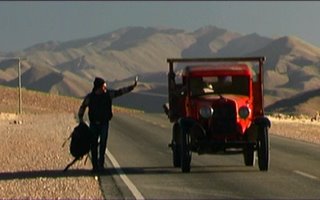 This weekend I decided to start dipping my toes into the cultural waters. I had seen a poster in the Subte for a documentary called Rio Arriba, that caught my eye because it took place in the communities north of Salta where I just visited. It tells the story of a young Argentine whose grandfather was owner of Salta's San Isidro Sugar Plant. Though now most are closed or automated, sugar used to be one of the region's, and the country's, important industries. But the plant owners culled their workforce from small aboriginal villages in the nearby Andes, practically forcing them to work hand-cutting sugar cane in back-breaking conditions and for pay that was less than ideal. And in the process, the aboriginal communities abandoned the traditional way of life they had known for centuries. The kind of story of exploitation of minorites for the sake of development that can be found in countless places around the globe. But what was interesting for me as a foreigner was learing about this particular incident in the context of Argentina. And the filmmaker told the story in a very personal way; his being the grandson of one of the men responsable for such exploitation, the film was structured around his coming to terms with his family history through the visiting of aborignal communites and farms and hearing the stories of those who had worked on the plantations.
Saturday night Jessica and her boyfriend Manú and I checked out a play called Isla Desierta by the Teatro Ciego at the Ciudad Cultural Konex. The Konex is this huge cultural complex converted from an old factory in an industrial part of town. There are a couple of theatre spaces, a cafe, a gallery, a huge outdoor space where they have festivals in the summer. They've really kept the rugged unfinished feel of the factory, and the spaces are huge.
Teatro Ciego means "blind theatre", and what was cool about the piece, besides the fact that some of the actors are blind, is that it all happened in the dark. Pitch dark. You enter the theatre in pairs, hands on the shoulders of one of the actors, and you go through a long passageway, through a some curtains, and then you are led to your seat. And there's not one speck of light - you can't see your hand in front of your face. And then the play starts, but everything happens in the dark, and the plot unfolds through dialogue, live sound effects, music, odours, sensations... The story was nothing extraordinary; a group of office workers on the 10th floor of a tower near the city port, who dream of travelling on one of the boats that continually enter and leave the harbour. One guy has travelled, and so he tells the stories of his travels to the group. As he recounts his adventures at sea, in China, and in the jungle, each of these worlds is created by the actors using all the senses except sight. I don't know how they did it, but they recreated live the sounds of a rowboat rowing through the water, people swimming ashore; they made a thunderstorm using some kind of fan and mist and when he arrived in China all of sudden you smelled what could only be what a busy Chinese street smells like.
My only complaint was that the story ended really abruptly and they flicked on the lights and you saw the actors and the theatre space, which everyone had imagined in their own way. It would have been nicer for the story to gradually wind down and the lights to come up slowly. The coolest part was less the story, though, and more the being in complete darkness.
While at the Konex I also picked up tickets for an aerial dance piece (!) for next Friday night. Cool!
 This weekend I decided to start dipping my toes into the cultural waters. I had seen a poster in the Subte for a documentary called Rio Arriba, that caught my eye because it took place in the communities north of Salta where I just visited. It tells the story of a young Argentine whose grandfather was owner of Salta's San Isidro Sugar Plant. Though now most are closed or automated, sugar used to be one of the region's, and the country's, important industries. But the plant owners culled their workforce from small aboriginal villages in the nearby Andes, practically forcing them to work hand-cutting sugar cane in back-breaking conditions and for pay that was less than ideal. And in the process, the aboriginal communities abandoned the traditional way of life they had known for centuries. The kind of story of exploitation of minorites for the sake of development that can be found in countless places around the globe. But what was interesting for me as a foreigner was learing about this particular incident in the context of Argentina. And the filmmaker told the story in a very personal way; his being the grandson of one of the men responsable for such exploitation, the film was structured around his coming to terms with his family history through the visiting of aborignal communites and farms and hearing the stories of those who had worked on the plantations.
Saturday night Jessica and her boyfriend Manú and I checked out a play called Isla Desierta by the Teatro Ciego at the Ciudad Cultural Konex. The Konex is this huge cultural complex converted from an old factory in an industrial part of town. There are a couple of theatre spaces, a cafe, a gallery, a huge outdoor space where they have festivals in the summer. They've really kept the rugged unfinished feel of the factory, and the spaces are huge.
Teatro Ciego means "blind theatre", and what was cool about the piece, besides the fact that some of the actors are blind, is that it all happened in the dark. Pitch dark. You enter the theatre in pairs, hands on the shoulders of one of the actors, and you go through a long passageway, through a some curtains, and then you are led to your seat. And there's not one speck of light - you can't see your hand in front of your face. And then the play starts, but everything happens in the dark, and the plot unfolds through dialogue, live sound effects, music, odours, sensations... The story was nothing extraordinary; a group of office workers on the 10th floor of a tower near the city port, who dream of travelling on one of the boats that continually enter and leave the harbour. One guy has travelled, and so he tells the stories of his travels to the group. As he recounts his adventures at sea, in China, and in the jungle, each of these worlds is created by the actors using all the senses except sight. I don't know how they did it, but they recreated live the sounds of a rowboat rowing through the water, people swimming ashore; they made a thunderstorm using some kind of fan and mist and when he arrived in China all of sudden you smelled what could only be what a busy Chinese street smells like.
My only complaint was that the story ended really abruptly and they flicked on the lights and you saw the actors and the theatre space, which everyone had imagined in their own way. It would have been nicer for the story to gradually wind down and the lights to come up slowly. The coolest part was less the story, though, and more the being in complete darkness.
While at the Konex I also picked up tickets for an aerial dance piece (!) for next Friday night. Cool!
Thursday, October 19, 2006
I have joined the 20th..uh...21st century
I have something to announce. I just bought a CELL PHONE. Oh my god! Who'd have imagined that I would finally embrace the technology that inspires so much horrible social behaviour in normally intelligent people. But seeing as I'm living in a hostel with shared phone that doesn't work that well and that cell phones are SUPER cheap and rampant here ( mine cost $40 and came with a $20 prepaid credit), I gave in. It'll make life easier.
The slick, metrosexual yet somehow still very macho cell phone salesman that sold it to me set it up with a ring tone of some British pop song that had very vulgar lyrics. He told me I thought I'd like it because it's in English. Then he asked me to explain the lyrics to him and I was like, "Um, your mother wouldn't approve." Then the other salesguy told me that there was a special on today; buy a phone and get the salesman's number for free. Ah, Argentina.
Gotta go find a church or public restroom or something to test out my new phone.
Cara de Queso
 Yesterday I felt like giving my Spanish a run with a subtitle-free movie. And obviously, I wanted to choose something local. I had seen some posters around town for a movie called Cara de Queso , which looked sufficiently funny and light to not be too hard for a non-Spanish speaker, so I decided to go for it.
At first glance, from the poster, it looked like some sort of Spanish Napoleon Dynamite rip-off. But it was far from it.
It as the story of a young Jewish boy named Ariel from Buenos Aires. Every summer his family escapes the heat of the city at their country, which is the Spanish word borrowed from English describing, from what I can gather, something like a country club slash gated community slash family summer camp. You have your golf course, pools, sports facilities, organized activites, etc, like in a country club, but there are a bunch of houses there, where people live for the summer. Sort of like a summer cottage, but not necessarily in the middle of the woods or on the beach. The particular country featured in the film was an exclusive Jewish club for Jewish families only.
The film underlines the parallel between the Jewish ghettos that used to exist in Eastern Europe and the self-created Jewish ghettos, such as this country club, that exist today. Though it was basically a mid- 90's coming of age story of this pre-teen boy and the wacky antics of him and his gang of friends, there were themes of exclusion and inclusion and abuse of power and being a minory woven throughout. So it was a little more enriching than your typical teen movie. Which showed in the crowd that came to see it, which included many middle-aged members of the very Buenos Aires Jewish community that the film examines.
(And in movie theatres here, you get an assigned seat! Of course, some old man was sitting in my seat, so I had to sit in someone else's seat...chaos could have ensued, but thankfully the theatre wasn't full...)
Subscribe to:
Posts (Atom)

