Some would say the best part about travelling is coming home. I'm not sure if I'd agree, but it's true that after a trip you come home a different person than when you left. Cliché, but true.
You just see the world differently. You take fewer things for universals, because you now know the reality you're used to isn't necessarily the same for everyone. You realize you'd gotten used to new things you hadn't even realized you'd gotten used to. You notice how many things at home have changed, and how many things haven't. You've changed.
Though I'm back in Montreal I haven't quite gotten out of trvaller mode yet. It's like I'm a tourist in a place I know well. After living 6 years in the same apartment, I'm now living on the other side of town, on the other side of the tracks.
New jobs, new experiences; fitting, for a person who feels completely renewed.
Monday, March 19, 2007

Saturday, March 10, 2007
Pics from Nova Scotia
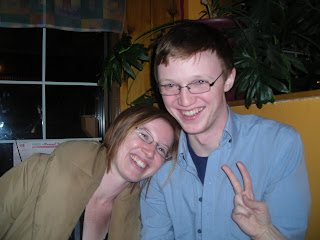
My siblings Matt, Mark, Natalie and I got together for dinner in Halifax on Thursday night, before going to catch one of Matt's bands play at the Attic.

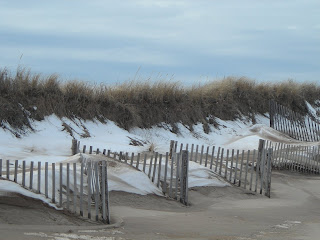
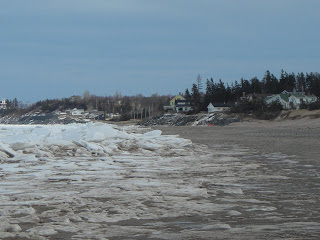
 Winter at Melmerby Beach. Warm winter = not much snow
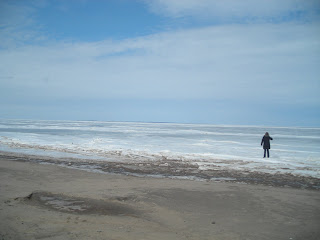

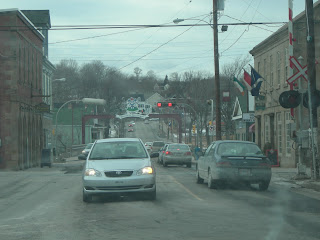
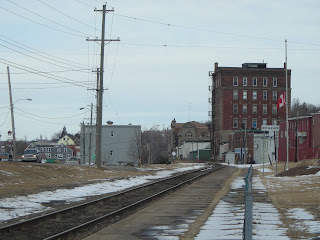
 New Glasgow, Nova Scotia. Population:10,000. Tallest building: 6 storeys.


 Winter at Melmerby Beach. Warm winter = not much snow


 New Glasgow, Nova Scotia. Population:10,000. Tallest building: 6 storeys.


Tuesday, March 06, 2007
Chile once more!
I've learned the secret to a smooth, wait-free trip across the Chile-Argentina border. Go in the middle of the night. Not only are there very few cars and busses crossing over, but the customs agents just want to go home, so they wave you through no matter how sketchy you look. My trip over the border in September took 3 hours; the way back was no more than 45 minutes.
My stint in Santiago was meant as a little downtime, chilling with my good friends Claudia and Jessica, before heading back to Canada. We stayed at Claudia's boyfriend Sebastian's house in the middle-class residential neighbourhood of La Florida. Such a change from the traffic-noisy corner of Montevideo and Marcelo T. in Buenos Aires; la Florida was rows of colourful little houses, lush plants and greenery in every tiny shoebox yard, and relative quiet, ( well, except for the barking dog I would say 85% of the homes had lurking in the yard or back alleyway...)
 Wednesday I took a day trip to the port city of Valaparaiso, Chile's second-largest city, about an hour and a half from Santiago, on the coast. I'd spent New Year's 2004 there, but it was a quick rush-in, rush-out job, as we were staying down the coast at the beach and only came into the city for the New Year's festivities. I'd wanted to go back and explore it at my own pace ever since.
Valparaiso's the seedy port cousin to Santiago as capital city. It's noisy, dirty, chaotic, dangerous, working class to the core - and utterly charming. The city consists of a series of hills, or cerros, that encircle a harbour. Twisting, narrow streets amongst rows of colourful, ramshackle houses seemingly piled on top of each other spread back from the shore and work their way up the hills. Several hills have funicular-style cable car elevators or asensores that facilitate pedestrian access between the lower town and the hillside neighbourhoods. On any given hillside you find a labyrinthine network of winding streets, deadend alleyways, and small stairways and passageways. It's urban planning at its worst ( or at its most absent) and that's exactly why the city is so amazing.
As soon as you leave the bus terminal in Valpo ( as the city's affectionately known), it gets in your face. People hawking everything from used clothes to meat to jewellery on the sidewalk. I took an old-fashioned streetcar from the bus terminal to the city's main plaza, and from there spent the whole day wandering. Up and down different asensores, from this cerro to that, getting lost in a maze of colorful houses and winding lanes and then figuring out where I was. Spending as much time as I could at every lookout I came across, absorbing the breathtaking views of the Pacific Ocean, and the sprawling, hilly rainbow that is the cityscape.
My stint in Santiago was meant as a little downtime, chilling with my good friends Claudia and Jessica, before heading back to Canada. We stayed at Claudia's boyfriend Sebastian's house in the middle-class residential neighbourhood of La Florida. Such a change from the traffic-noisy corner of Montevideo and Marcelo T. in Buenos Aires; la Florida was rows of colourful little houses, lush plants and greenery in every tiny shoebox yard, and relative quiet, ( well, except for the barking dog I would say 85% of the homes had lurking in the yard or back alleyway...)
 Wednesday I took a day trip to the port city of Valaparaiso, Chile's second-largest city, about an hour and a half from Santiago, on the coast. I'd spent New Year's 2004 there, but it was a quick rush-in, rush-out job, as we were staying down the coast at the beach and only came into the city for the New Year's festivities. I'd wanted to go back and explore it at my own pace ever since.
Valparaiso's the seedy port cousin to Santiago as capital city. It's noisy, dirty, chaotic, dangerous, working class to the core - and utterly charming. The city consists of a series of hills, or cerros, that encircle a harbour. Twisting, narrow streets amongst rows of colourful, ramshackle houses seemingly piled on top of each other spread back from the shore and work their way up the hills. Several hills have funicular-style cable car elevators or asensores that facilitate
 pedestrian access between the lower town and the hillside neighbourhoods. On any given hillside you find a labyrinthine network of winding streets, deadend alleyways, and small stairways and passageways. It's urban planning at its worst ( or at its most absent) and that's exactly why the city is so amazing.
As soon as you leave the bus terminal in Valpo ( as the city's affectionately known), it gets in your face. People hawking everything from used clothes to meat to jewellery on the sidewalk. I took an old-fashioned streetcar from the bus terminal to the city's main plaza, and from there spent the whole day wandering. Up and down different asensores, from this cerro to that, getting lost in a maze of colorful houses and winding lanes and then figuring out where I was. Spending as much time as I could at every lookout I came across, absorbing the breathtaking views of the Pacific Ocean, and the sprawling, hilly rainbow that is the cityscape.
Mendoza
The city of Mendoza followed Malargüe on the itinerary. It was like coming full circle, as Mendoza had been my first stop in Argentina back in September. And now it was to be my last stop on the way out of the country. It was funny, everything Argentine that had stood out to me the first time in contrast to the Chile I had been used to - the accent, the insanity over football, the money, the different look of the people, the Argie mini-mullet, the real coffee, the tiny empanadas - was now a part of my life, practically. The pretty, quiet streets that had seemed so calm after the chaos of Santiago now seemed calm after the chaos of Buenos Aires.
Simon and I met up at the bus station, and hiked in the heat to our hostel. Unlike the hostel I stayed at the first time, this place, though very nice on the inside, was situated outside of the centre, in a sketchy area seemingly popular with Mendoza's ladies of the night. After a couple of games of foosball with the 5 year-old son of the hostel owners (who, sizing me up as easy Canadian prey, was QUITE disappointed I kicked his Argentine ass...), we went out for some beef and wine downtown.
The next day was something like 40 degrees. Too hot for wandering around town. Too hot for biking in the mountains. So we caught a lift with a guy associated with our hostel the Termas de Cacheuta, up in the mountains. Seriously the crappiest car ever (the dashboard was missing...), driven in typical insane Argentine fashion at breakneck speed up the winding mountain road. As many Argentine cars run on a dual system of gasoline and natural gas, we stopped for a natural gas fill up on the way. At a natural gas station, everyone has to get out of the car as it's filled, as a safety precaution. ( So I guess if the car blows up you'll be standing oh-so-safely 1 foot away, instead of in it.)
The termas were a complex of several pools of thermal mountains waters, of varying temperatures. Lots of families, though the desert plants and the overtowering mountains kept it from feeling too much like a water park. So we soaked our bones and soaked up the sun, and I actually saw someone whiter than me for once, which made me happy. Afterwards, we dried off and had a maté as the families filed out of the complex.
We narrowly missed getting stranded in the small mountain village housing the termas as we jumped onto a bus back to Mendoza as it was pulling away.
Back in town, we stopped for supper at the Automovil Club Argentina (their version of CAA.) Yes, they have a restaurant. An unlikely spot, you say? They had a wicked terrasse on the street, sweet food deals, and the place was full of happy, well-fed, if older, people.
Check out Simon's gallery of pics from the Termas.
Saturday we decided on a trip up to the Andes. I dare you to visit Mendoza, it's skyline overtaken my the Andes' impending presence, and not feel the urge to get a bit closer. The guy that ran our hostel let us in on a secret; instead of shelling out 150 pesos for a guided group excursion up into mountains, there was a bus that left every morning from the bus terminal for 15 pesos. The two main attractions, Parque de Aconcagua and Puente del Inca, were a walkable 4km apart, and the bus returned to Mendoza in the evening. Argentines pride themselves on not necessarily cheating the system, but definitely milking it, and I was more than happy to continue my habit of undermining the tourism industry by putting together a DIY excursion.
The bus left at 7am sharp and began the winding 4 hour ascent to the top of the Andes, right to the Chilean border. The higher we climbed the narrower and twistier the roads got, snaking through progressively smaller towns and villages as our ears popped with altitude. Frequent stops slowed the trip down. Though watching people load, and then unload further down the road, loads of firewood, fresh bread, and that day's newspaper, you realized that the tourists were among the least pressing cargo on the bus that acted as a important means of transport between remote communities.
We jumped off the bus at the side of the road at the entrance to Aconcagua Provincial Park. Named after the tallest peak in the Andes (almost 7000m!), the reserve is very popular among hikers, as well as the mountaineers that come attempting to scale peak. There was not a cloud in the electric blue sky, and the sun beat down on us as we did a short day hike though the park. Unlike the Andes farther south, where forests abound, here there was not a tree to be found and the day was hot! We gazed off in the distance at the snowy peak of Aconcagua (which v ery few climbers have been able to access this year, as it is unseasonably snowier than usual...)
Once hiking time was over, we started the descent along the side of the serpentine mountain road to Puente del Inca. This road being the main throroughfare for truckers hauling their wares from Buenos Aires to Santiago, as well as all international busses and car traffic, it wasn't quite the idyllic hike we'd had inside the park. Despite the incredible 360 degree mountain scenery. We spotted a trail ( that later turned out to be used by horseback riders) that followed an old set of railroad tracks, and abandoned the paved shoulder.
Puente del Inca is this funky phenomenon. First, it's a natural stone bridge over a rushing river. Basically the river carved a hole in the rock, so you have a bridge over the water, but it's the same piece of rock making up the bridge, and the cliffs on either side. Then there's a hotel and spa complex built on the side of the cliffs in the 1940's, that was later washed out in a flood, and now lays abandoned. But contributing to a constantly changing and evolving rock landscape is the high sulphur content in the river water, which, builds up and erodes surrounding rock faces with bright yellow mineral deposits. Besides the bridge there is a small village, consisting of a hostel, a couple of restaurants and a bunch of souvenir shops. The place is a major tourist attraction, despite the fact that due to erosion visitors can no longer cross the Puente, they can only take pictures from afar. Which is what we did, and then retired to the terrasse of a small snack bar for some nourishment, and to wait for the bus back to Mendoza.
Simon's shots of our day in the Alta Montaña.
Simon and I met up at the bus station, and hiked in the heat to our hostel. Unlike the hostel I stayed at the first time, this place, though very nice on the inside, was situated outside of the centre, in a sketchy area seemingly popular with Mendoza's ladies of the night. After a couple of games of foosball with the 5 year-old son of the hostel owners (who, sizing me up as easy Canadian prey, was QUITE disappointed I kicked his Argentine ass...), we went out for some beef and wine downtown.
The next day was something like 40 degrees. Too hot for wandering around town. Too hot for biking in the mountains. So we caught a lift with a guy associated with our hostel the Termas de Cacheuta, up in the mountains. Seriously the crappiest car ever (the dashboard was missing...), driven in typical insane Argentine fashion at breakneck speed up the winding mountain road. As many Argentine cars run on a dual system of gasoline and natural gas, we stopped for a natural gas fill up on the way. At a natural gas station, everyone has to get out of the car as it's filled, as a safety precaution. ( So I guess if the car blows up you'll be standing oh-so-safely 1 foot away, instead of in it.)
The termas were a complex of several pools of thermal mountains waters, of varying temperatures. Lots of families, though the desert plants and the overtowering mountains kept it from feeling too much like a water park. So we soaked our bones and soaked up the sun, and I actually saw someone whiter than me for once, which made me happy. Afterwards, we dried off and had a maté as the families filed out of the complex.
We narrowly missed getting stranded in the small mountain village housing the termas as we jumped onto a bus back to Mendoza as it was pulling away.
Back in town, we stopped for supper at the Automovil Club Argentina (their version of CAA.) Yes, they have a restaurant. An unlikely spot, you say? They had a wicked terrasse on the street, sweet food deals, and the place was full of happy, well-fed, if older, people.
Check out Simon's gallery of pics from the Termas.
Saturday we decided on a trip up to the Andes. I dare you to visit Mendoza, it's skyline overtaken my the Andes' impending presence, and not feel the urge to get a bit closer. The guy that ran our hostel let us in on a secret; instead of shelling out 150 pesos for a guided group excursion up into mountains, there was a bus that left every morning from the bus terminal for 15 pesos. The two main attractions, Parque de Aconcagua and Puente del Inca, were a walkable 4km apart, and the bus returned to Mendoza in the evening. Argentines pride themselves on not necessarily cheating the system, but definitely milking it, and I was more than happy to continue my habit of undermining the tourism industry by putting together a DIY excursion.
The bus left at 7am sharp and began the winding 4 hour ascent to the top of the Andes, right to the Chilean border. The higher we climbed the narrower and twistier the roads got, snaking through progressively smaller towns and villages as our ears popped with altitude. Frequent stops slowed the trip down. Though watching people load, and then unload further down the road, loads of firewood, fresh bread, and that day's newspaper, you realized that the tourists were among the least pressing cargo on the bus that acted as a important means of transport between remote communities.
We jumped off the bus at the side of the road at the entrance to Aconcagua Provincial Park. Named after the tallest peak in the Andes (almost 7000m!), the reserve is very popular among hikers, as well as the mountaineers that come attempting to scale peak. There was not a cloud in the electric blue sky, and the sun beat down on us as we did a short day hike though the park. Unlike the Andes farther south, where forests abound, here there was not a tree to be found and the day was hot! We gazed off in the distance at the snowy peak of Aconcagua (which v
 ery few climbers have been able to access this year, as it is unseasonably snowier than usual...)
Once hiking time was over, we started the descent along the side of the serpentine mountain road to Puente del Inca. This road being the main throroughfare for truckers hauling their wares from Buenos Aires to Santiago, as well as all international busses and car traffic, it wasn't quite the idyllic hike we'd had inside the park. Despite the incredible 360 degree mountain scenery. We spotted a trail ( that later turned out to be used by horseback riders) that followed an old set of railroad tracks, and abandoned the paved shoulder.
Puente del Inca is this funky phenomenon. First, it's a natural stone bridge over a rushing river. Basically the river carved a hole in the rock, so you have a bridge over the water, but it's the same piece of rock making up the bridge, and the cliffs on either side. Then there's a hotel and spa complex built on the side of the cliffs in the 1940's, that was later washed out in a flood, and now lays abandoned. But contributing to a constantly changing and evolving rock landscape is the high sulphur content in the river water, which, builds up and erodes surrounding rock faces with bright yellow mineral deposits. Besides the bridge there is a small village, consisting of a hostel, a couple of restaurants and a bunch of souvenir shops. The place is a major tourist attraction, despite the fact that due to erosion visitors can no longer cross the Puente, they can only take pictures from afar. Which is what we did, and then retired to the terrasse of a small snack bar for some nourishment, and to wait for the bus back to Mendoza.
Simon's shots of our day in the Alta Montaña.
Malargüe - La Payunia
 Tuesday February 21st I got up at the crack of dawn to catch a bus to the town of Malargue, 3 hours from San Rafael. The early morning start was necessary in order to get to Malargüe for a 9am excursion out to La Payunia Volcanic Reserve.
150km from Malargüe via bumpy, winding backroads, the reserve is famous because it contains something like 300 volcanos within its boundaries. The most recent eruption was more than 500 years ago, but the effects of centuries of eruptions can be seen in landscape, most notably the black desert-like terrain. Upon closer inspection it's not black sand, but rather what you could call volcanic gravel. Different peaks and craters dot the reserve, which, given the altitude, is home to lots of llamas and guanacos.
The tour company I had signed up to go out there with is famous for the open-air caravan they take visitors through the reserve in. You're in the vehicle most of the day, but since the caravan consists of a sort of a roofed cart with benches pulled behind a 4WD truck, you get a more up close and personal experience with the landscape than you would in a traditional van.
Except when its raining. Which it was when I arrived in Malargue. Then they pull down these plastic window-style coverings to shield the passengers from the elements. Well, not all the elements. Malargüe was also experiencing a cold snap when I was there, and the day we went out would have been nippy for a November day in Montreal, let alone Argentina in the summer. Not really the day for an open-air caravan ride.
But we set out anyway.
As the twelve us as packed into the caravan, each of us layering on every item of the inadequate summer clothing we'd all predictably show up with, we were hoping that the weather would soon clear up. But, to the contrary, the higher the altitude as we climbed the road into the reserve, the colder it got, the stronger the wind, and, most frustratingly, the foggier it became. The cold and wind we could have handled, had we been able to see what was around us. But the guide's explanations just kept on coming out like "Well, over there in that cloud is Volcano such and such.." or normally, on a sunny day, from here there's this AMAZING view of blah blah blah..." The stops on the way through the reserve, which normally were for short hikes, walking around, taking in the amazing open spaces and strangely coloured geographical landscapes, were reduced to a quick run around in the bone-chiling wind and then getting back into the truck as quickly as possible. The silver lining was that the steaming maté being passed around inside the truck was all the more welcome...
And then it was mutiny - almost. Choro (our local guide/driver of sherpa-like qualities who new the terrain and the climate like the back of his hand and sped that caravan over dunes and hills like it was nobody's business) drove the truck into this nook he knew of behind a small hill where we were shielded from the wind for us to eat our lunch of empanadas and wine. By this point everyone was freezing, and sort of bored, or sort of pissed or very pissed at the lack of being able to see anything through the thick fog. There was a huge group debate on whether we should continue on into the fog, or whether we should head back to civilization. We were almost at the crater, the kind of crowning glory of the reserve because of the impressive views from the rim. Choro insisted that it looked like it was clearing up over the crater. But everyone was at the end of their rope. But one guy suggested that we listen to Choro, go onto the crater, and then if it were still cloudy from the top, turn back. And so that's what we did.
And were we all ever glad we did so. Magically, somewhere between lunch and the top of the crater, it totally cleared up, and got warm and sunny. The caravan snaked up the side of the crater, and then we got out and hiked up the rim for some of what I would qualify as the most spectacular views of my whole trip to Argentina. The Andes in the distance, the black volcanic pampa/desert terrain, dotted with flashes of yellow and green plant life, and the rainbow effects of mineral deposits.
On the way back down we got to see all the amazing landscapes we missed on the way up. Mood inside the caravan improved severalfold. For me, the near-freezing experience of the morning was worth it for the views from the top. Not everyone thought so, though, and when we got back to the company's office, there was a major bitch session with the company staff. I stayed out of it and went home to my hostel for some pasta and a well deserved bottle of wine.
Malargue - Cavernas de las Brujas
 My second outing from Malargüe was thankfully less eventful than the first. Cavernas de las Brujas is a network of caves in the mountain face out in the middle of nowhere. Legend has it the caves used to be used for shamanic rituals by local aboriginals, hence the name (bruja=witch.)
You donned your helmet and headlamp, and then went into the caves for a two-hour visit that involved hanging out in the hugeentry chamber of the cave to
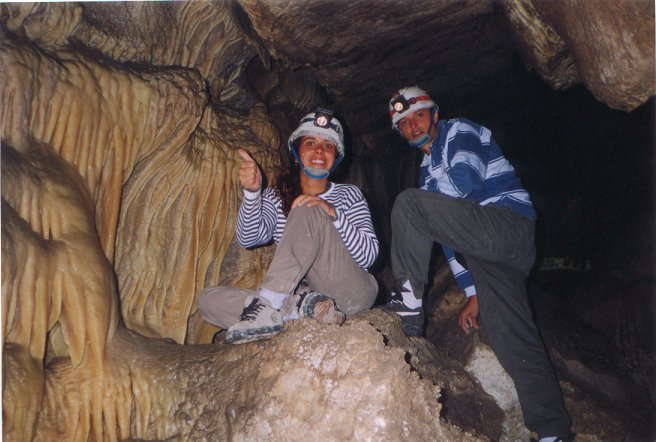 get our eyes used to the darkness, and then much climbing and shimmying through narrow crevices, the whole puncuated by historical and geological explanations by our amazing guide Estela.
 A virgin caver, I thought it was cool, though some Europeans complained it was a let-down compared to the caves they've got back home.
We stopped for what had been advertised as a "hike" at a park on the way back to Malargue afterward. The "hike" was a 30 minute nature walk with 15 other people along a trail to a grantedly pretty little waterfall. A guide stopped the group every 2 minutes to explain the fossils found along the trail to the group of bored-looking kids and ill-dressed middle aged women in flip flops and mini-skirts. Blah!
Luckily, the "hike" was followed by lunch at a restaurant featuring the region's famous chivito! Aka. GOAT ( though I didn't know it at the time...could have sworn it was beef of some sort...) Mmmm, a big hunk of goat meat on a huge bone, roasted over an open fire and eaten with your bare hands. I then understood why Malargue's chivito is famous throughout all of Argentina.
Monday, February 19, 2007
Bikes and Bodegas
 Undermining the tourism industry. Why pay big bucks for a tourism professional to organize your day, when you can do it yourself for a fraction of the price? This seemed to be an underlying theme of my time in San Rafael.
Vanesa and Laura were my dorm-mates, on vacation from their office jobs in Buenos Aires. We decided to forego the organized bike tours of the wine country just outside town and venture out on our own. We stumbled across a bike shop that rented comfy, wide-tired, coaster-brake bicicletas playeras at 15 pesos for an 8-hour rental. And the local tourist office gave us info, addresses and opening hours of the handful of bodegas in the area; they even drew
 us a map.
A quick trip to the mercado to pick up some snacks for the road, and off we went. Getting out of town was a bit nerve-wracking; cycling downtown Montreal at rush hour has nothing on negotiating the insanity of the roads in even a small Argentine city. But just out of town a bike path appeared parallel to the road. It was warm and sunny, that intense Andes sun that beats down ( and after soaking it up the length of a day leaves you zapped come evening time...) The ride was quite flat, the landscapes on either side vineyards and humble houses, the Andean cordillera faint in the distance.
 So the rhythm went like this: Bike a couple of kilometres, arrive at a winery, go for their free guided tour and tasting(!). Chill out outside on the property until the buzz wears off. Then continue on to the next. There was an olive oil plantation/balsamic vinegar factory along the route as well. Though after their tour that ended in an educational video full of images of gfresh salads and glistening vegetables they left you hanging; there was no tasting to be had. What a rip!
The itinerary finished off at the uber-classy Bianchi complex, the white-walled buildlings that housed the plant, warehouses, and sales and showroom flanked by a huge manicured lawn and fountains, in addition to a large vineyard. The place was packed with tourists waiting for the tour, with just as many buying wine and champagne by the crate in the gift shop.
 There were a surprising number of bored-looking kids on the tour, undoubtedly dragged along by their vacationing parents eager for a break from running around in the mountains. Thanks, Mom and Dad, for opting for Disney World and not a winery tour, when we went on OUR family vacations.
We biked back to the hostel and got a delivery of asado and beer for supper. Oh yes, huge chunks of Argentine beef straight off the barbeque, delivered with side dishes and beer straight to your home. Argentina's the BEST!
( On an unrelated side note: I was the only foreign tourist in the hostel in San Rafael. The place was filled with Argentines on vacation. You see, with the exchange on the Argentine peso as it is, many Argentines now choose to vacation within their own country. As a result, in the last 5 years the Argentine tourism industry has ballooned, with the resulting development and expansion of infrastructure and services all over the country. Good news for the independent traveller.)
San Rafael
 Got into San Rafael at 4am on Saturday. San Rafael's in Mendoza province, three hours-ish south of Mendoza city. Walking around the city on sunny Saturday afternoon I was reminded of the vibe that exists in Mendoza; things are pretty, quiet, and laidback, and there's an omnipresent cloudless, electric blue sky that I think has something to do with being so close to the Andes.
I went from one end of the town to the next, visiting the tourism office and travel agencies figuring out how to best spend my couple of days in the region. When the crowded Saturday afternoon streets become suddenly deserted at around 2 or 3pm, I realized sanrafaelinos observe siesta scheduling; that is, businesses are open in the morning until the early afternoon, and then close and re-open in the early evening. So well, I decided to do a little "When in Rome.." and went back to the hostel for an afternoon nap.
 Sunday I decided to eschew the organized excursion route and go up into the Cañon del Atuél, the river canyon and surrounding mountains that are the area's main attraction, on the city bus and jump off at some point along the route that looked interesting.
The bus rounded a bend and I saw a couple of signs for rafting trips down the Atuél river, so I got off. A couple of minutes later I was sun-screening up for a trip down the river with a young family and a couple of guys from Mendoza. The level-2 rapids didn't give us the kind of rocky ride I was expecting ( I'd never gone rafting before... only seen it on TV) but the sun was bright the river was refreshing. At one point we jumped into the water and, holding onto the raft, were pulled down the river by the current.
The rafting company's "office" doubled as a general store and a bar, so after getting a drive back upstream in the company van, I followed up the rafting session with a couple of cold beers with some of my rafting partners. We sat at a couple of umbrella-ed tables on the roadside, me and two guys from Mendoza who'd been travelling around the province on motorbike, and told stories, jokes and talked about our respective countries and regions. I turned down their offer of a ride down the valley to San Rafael on the back of a Harley, though, because I felt squeezing a little more activity into my day in the canyon.
I realy wanted to go hiking. Many of the adventure tourism companies in the canyon offered guided excursions, but there was usually a 3 person minimum and at least a 30 peso charge. I started chatting with the woman who'd sold me my rafting trip and she clued me into the fact that right across the road from where we were standing, there was a trail that followed an old riverbed into the sandstone hills for about an hour. She may now have been wheelchair bound, she let me know, but she'd grown up in the area and knew all the trails that crisscrossed across it. I had a peaceful walk through the grey standstone hills, so different than the lush green forests I'm used to hiking in Canada.
I caught the bus back down to San Rafael and hooked up with Laura and Vanessa, two girls from Buenos Aires that were also my dormitory mates, for dinner.
Friday, February 16, 2007
Rainy Neuquén
 Neuquén, pop. approx. 200,000, is a nice little city. The regional capital. Touristy in as much as it's a transport hub for Patagonia, but not really for anything else. So the streets give off a normalcy, full of everyday people doing everyday things. Even when it's unseasonably 12C and rainy.
(Today's it's rainy and thundering all over the country. There was a freak hail storm the other day in Mendoza province. And someone told me it's snowing in the Andes! And that's where I'm headed tonight.)
The lady at the tourist information booth tried to give me a brochure on fly fishing in the region. I passed. But maybe I should have taken it. You can fly fish in the rain, right? I've already walked around the quaint, and compact town centre. I don't have any hotel room to hang out in, and it's 4 hours till my bus.
Puerto Madryn
 Yesterday was a cloudy and grey day spent wandering around Puerto Madryn. Hostel check-out was at 10am, and my bus to Neuquén didn't leave until 9:45pm.
 Madryn, as small as it is, seemed downright urban compared to Puerto Pirámide. The beach that runs the length of town was practically empty, as it was overcast and a bit chilly, though the sun did peek out in the afternoon for a bit.
So it was reading for a bit on the beach, walking around, having coffee overlooking the ocean and reading a bit more. I found a little reading nook underneath the cement overhang of the promendade that runs the length of the beach for when I wanted to escape the UV rays.
Thursday, February 15, 2007
Change of itinerary
So, the hard reality of travelling by the seat of your pants without an itinerary or reservations hit home. I took the bus back to Puerto madryn from idyllic Puerto Pirámide last night to catch the overnight bus to Esquel, in the Patagonian Andes. But it was full! That's high season in Argentina for you.
So I've stayed the night in Puerto Madryn, going to spend the afternoon on the beach, and then tonight it's back on the bus again. But, I've completely changed my itinerary, after realizing that the way I'd been envisageing things I was going to spend more time on the bus than actually enjoying nature. That's the trouble with Argentina ( and I suppose Canada too...) There are just so many gorgeous natural wonders to see. But they're all sort of far apart. 8h, 12h, 2oh bus rides. It's hard to resist the urge to see and do too much.
So I'm heading to Neuquén tonight on the bus. Will spend a night there, do a day trip before hopping on the bus to San Rafael, in Mendoza province, where I'll spend a couple of days. Near the Andes, though not the Patagonian andes. But with lots of amazing sights and scenery.
And then I'll just be a short hop from Mendoza, where I'll end up on thursday the 22.
That's the joy of travelling alone.... you can change your itinerary at the drop of a hat.
So I've stayed the night in Puerto Madryn, going to spend the afternoon on the beach, and then tonight it's back on the bus again. But, I've completely changed my itinerary, after realizing that the way I'd been envisageing things I was going to spend more time on the bus than actually enjoying nature. That's the trouble with Argentina ( and I suppose Canada too...) There are just so many gorgeous natural wonders to see. But they're all sort of far apart. 8h, 12h, 2oh bus rides. It's hard to resist the urge to see and do too much.
So I'm heading to Neuquén tonight on the bus. Will spend a night there, do a day trip before hopping on the bus to San Rafael, in Mendoza province, where I'll spend a couple of days. Near the Andes, though not the Patagonian andes. But with lots of amazing sights and scenery.
And then I'll just be a short hop from Mendoza, where I'll end up on thursday the 22.
That's the joy of travelling alone.... you can change your itinerary at the drop of a hat.
Puerto Pirámide
 The Peninsula Valdes is a chunk of land, a couple of hundred kilometres in circumferences, that juts out from the Eastern coast of Argentina into the Atlantic. (Though it's not marked on my little map here, it's the point that sticks out near Rawson.) It's dry and dusty, not much to see inland besides salt deposits and scrubby bushes, and the shoreline consists of sheer 70m cliffs dropping off to the sea ( with a couple of beaches here and there.) The cliffs shields the approach of the cold wind from the west, warming the water in and around the peninsula, and thus attracting all kinds of marine wildlife, such as sea lions, elephant seals, dolphins, orcas, and other types of whales.
Most people who come to visit the peninsula stay in the town Puerto Madryn, on the mainland, but after 4 months of urban delirium in Buenos Aires I was looking for a nature escape, so I spent two nights in tiny Puerto Pirámide ( pop. 200), on the peninsula itself.
Paradise, really. This Nova Scotian has always found it hard to be on a beach where you have to jockey for  a bit of sand between music-blasting jocks, kids playing paddle ball, and suntanning Barbie-wannabes. But the beaches near Puerto Pirámides, wide, wild, and most importantly, practically empty, had more in common with the never-ending beaches in the Maritimes than most. Just the way I like it.
 a bit of sand between music-blasting jocks, kids playing paddle ball, and suntanning Barbie-wannabes. But the beaches near Puerto Pirámides, wide, wild, and most importantly, practically empty, had more in common with the never-ending beaches in the Maritimes than most. Just the way I like it.
 I went on a boat excursion to see the colony of sea lions just down the coast from the village, and to do a bit of snorkeling. I rented a bike and biked around the area aurrounding the village. Surrounding the beach there are lots of cliffs and dunes to explore. And I stayed in the what I think may be the quietest hostel in the world. The village was so relaxed and the whole  place emenated peace and quiet.
 place emenated peace and quiet.
 As the the girl from the hostel with whom I spent an afternoon at the beach put it, "Amo este lugar." ( I LOVE this place!) I would have to agree with her.
Wednesday, February 14, 2007
The road to Patagonia
 After a couple of months in Buenos Aires I'd forgotten that the rest of Argentina is completely different than the capital. ( Sort of like the way that people in Bs As forget the rest of the country exists...)
The 18 hour bus ride from Buenos Aires to Puerto Madryn was my re-introduction to the vast, wide-open spaces that you find in so much of this country. The feeling of space.
I had been expecting Patagonia to be a little less, dry. A little more green. Maybe once you get farther south. But the area between Mar del Plata and Puerto Madryn ( these places aren't on my little map here, but Puerto Madryb is near Rawson) is dusty and dry. The vegetation is short and scrubby. The sky blue, blue, blue and the highway long and winding.
Monday, February 12, 2007
Tigre and The Paraná Delta
It's a great contrast. Just one hour north of sprawling, urban Buenos Aires, you have the lower reaches of a huge delta system. Five hundred rivers ranging from small streams to some of Argentina's most important water systems, and thousands of square kilometres of the land formed by the sediment collected between them.
The town of Tigre, a quiant suburb of Buenos Aires, is the gateway to the Delta. It's the end of the commuter train line, it has a big amusement park and a giant market most famous for its furniture and fruit. It's also where all the companies that operate tours and water taxis through the delta are based.
There are no roads on the islands of the delta, the waterways assure transportation via boat or water taxi for the people and businesses found there. There are schools and churches, "corner" stores and floating gas stations, all accessible by water only, for the thousands of permanent and seasonal residents of the area.
So on steamy Saturday afternoon Simon and I jumped the train, and then jumped a long wooden boat that took us on a visit of the first section of the Delta. The first section is mostly cottages for people from the city; everything on stilts, so that rising river waters don't routinely damage what's inside.
The waters are brown, the greenery lush. Willows dip into the waters and ferns overhang narrow waterways. The dock in front of every house oftens acts as a patio, from where to take in a little sun, drink maté with friends, oversee the kids swimming, and watch the boats go by.
See Simon's pictures of the afternoon here.
The town of Tigre, a quiant suburb of Buenos Aires, is the gateway to the Delta. It's the end of the commuter train line, it has a big amusement park and a giant market most famous for its furniture and fruit. It's also where all the companies that operate tours and water taxis through the delta are based.
There are no roads on the islands of the delta, the waterways assure transportation via boat or water taxi for the people and businesses found there. There are schools and churches, "corner" stores and floating gas stations, all accessible by water only, for the thousands of permanent and seasonal residents of the area.
So on steamy Saturday afternoon Simon and I jumped the train, and then jumped a long wooden boat that took us on a visit of the first section of the Delta. The first section is mostly cottages for people from the city; everything on stilts, so that rising river waters don't routinely damage what's inside.
The waters are brown, the greenery lush. Willows dip into the waters and ferns overhang narrow waterways. The dock in front of every house oftens acts as a patio, from where to take in a little sun, drink maté with friends, oversee the kids swimming, and watch the boats go by.
See Simon's pictures of the afternoon here.
Plans a' changin'
So, well, before my travels could even start the itinerary had to change.
The Atlantic coast of Argentina, between Buenos Aires and Neochea, is a mob scene in January and February. Basically, all the millions and millions of people that live in Buenos Aires decide to escape the steamy, sticky heat by going to the beach. All at once. To the same beaches.
And this year it's worse that usual. Usually, Uruguay's coast gets its fair share of vacationing Argentines. But this year several of the border crossings for cars between Argentina and Uruguay are blocked by protestors. You see, there were a couple foreign-owned paper companies looking to build big, polluting plants in either Argentina or Uruguay. Argentina vetoed the proposal, because of the environmental repercussions. Uruguay decided to go acept it. Except, the plants will be built on the river that forms the border between the two countries, and the pollution will end up touching just as many Argentina cities as Uruguayan. So the citizens of the town affected have been doing rotating strikes on the international bridges for a couple of months now.
Anyway, so the weekend at the beach turned into one last weekend in Buenos Aires, with a daytrip to the Tigre Delta. I left Buenos Aires Sunday night on the overnight bus and am now in Puerto Piramide, near Puerto Madryn.
The Atlantic coast of Argentina, between Buenos Aires and Neochea, is a mob scene in January and February. Basically, all the millions and millions of people that live in Buenos Aires decide to escape the steamy, sticky heat by going to the beach. All at once. To the same beaches.
And this year it's worse that usual. Usually, Uruguay's coast gets its fair share of vacationing Argentines. But this year several of the border crossings for cars between Argentina and Uruguay are blocked by protestors. You see, there were a couple foreign-owned paper companies looking to build big, polluting plants in either Argentina or Uruguay. Argentina vetoed the proposal, because of the environmental repercussions. Uruguay decided to go acept it. Except, the plants will be built on the river that forms the border between the two countries, and the pollution will end up touching just as many Argentina cities as Uruguayan. So the citizens of the town affected have been doing rotating strikes on the international bridges for a couple of months now.
Anyway, so the weekend at the beach turned into one last weekend in Buenos Aires, with a daytrip to the Tigre Delta. I left Buenos Aires Sunday night on the overnight bus and am now in Puerto Piramide, near Puerto Madryn.
Monday, February 05, 2007
Impending Travels
So this Friday it's bye-bye Buenos Aires.
Me and my friend Simon are going to some beach on the Atlantic coast for the weekend. A beach of the rustic and nature kind, as opposed to the corporately sponsored, seen and be seen kind.
Then I'm continuing on alone to Puerto Madryn for a couple of days. It's a UNESCO nature reserve where you can rip around on the ocean in a boat and check out orcas, whales, sea lions, penguins and other such things.
Then it's a week in the Argentine Andes, hiking and biking and "fucking nature" ( as my friend David would say.)
Then it's a few days in Mendoza, and then across the Andes to Santiago for a few days and a few bottles of wine with my Chilean crew.
And then it's back on the plane for Canada March 1st! Santiago-Miami, Miami-Montreal, Montreal-Halifax, baby. A week in the motherland with the fam, and then it's back to Montreal on March 10-ish.
Me and my friend Simon are going to some beach on the Atlantic coast for the weekend. A beach of the rustic and nature kind, as opposed to the corporately sponsored, seen and be seen kind.
Then I'm continuing on alone to Puerto Madryn for a couple of days. It's a UNESCO nature reserve where you can rip around on the ocean in a boat and check out orcas, whales, sea lions, penguins and other such things.
Then it's a week in the Argentine Andes, hiking and biking and "fucking nature" ( as my friend David would say.)
Then it's a few days in Mendoza, and then across the Andes to Santiago for a few days and a few bottles of wine with my Chilean crew.
And then it's back on the plane for Canada March 1st! Santiago-Miami, Miami-Montreal, Montreal-Halifax, baby. A week in the motherland with the fam, and then it's back to Montreal on March 10-ish.
I'm cheezy, I know
 My friend Cameron took this picture for me when he was visiting Mar del Plata recently.
Hardy Har Har!
Friday, February 02, 2007
el Catedral
It's fitting that the very neighourhoods of Buenos Aires in which tango was born are now becoming home to venues for young people to dance and listen to it. Neighbourhoods like Almagro, historic home to tango legend Carlos Gardel, are full of small underground bars, theatres and clubs where not only tango but independant theatre and art flourish.
It's a formula we've seen in cities all over the world. You've got a run down, working class neighbourhood where the rents are low. Artists, many of whom are not of the working class stock the neighbourhood is made up of, flock there, because of ample cheap studio and living space. Low rent means less time working the lame day job, more time being creative. (Of course, the cycle finishes off when the artists and related activity transform the face of the neighbourhood into something more broadly appealing, it becomes an attractive place to live for the yuppie class, and rents go up, eventually driving out the original inhabitants. Gentrification, baby.)
Almagro, though, has not become completly gentrified as of yet. It's still in the stage where it's just home to a lot of great theatre and underground clubs. Like El Catedral, where I ended up both Wednesday and Thursday nights. I don't know what it used to be before. It's huge vaulted ceilings recall a silo or warehouse. A humungous open space, with worn hardwood floors, an ecelectic mismatch of tables and chairs I'm sure were pulled out of the garbage, with an open dance floor/performance space in the middle. The walls are covered with a range of, well, stuff, some we could refer to as art, others that some would, nicely, call found objects, or less nicely, call junk. The crowning piece is a huge red fabric lampshade/chandelier that mildly resembles an oversized, deformed heart. The bar is run by a group of guys who supposedly live on the premises, though I'm not sure where. The bar was quite the going concern for a while, but then was closed down for a while. It's been open again for a couple of months, and getting back on its feet.
Thursdays are milonga nights at the Catedral. Tango dancing, though nothing resembling your stereotypical tango affair. The revival of tango amongst Buenos Aires' youth means that they dance tango in a way adapted to their own style. so on the Catedral's dance floor you see everything from jeans, shorts and sports sandals to those baggy canvas hippy pants. And a couple of couples dressed to the nines in low-cut dresses and dress pants and shirts. A pair of high, strappy heels is obligatory for the woman, though, no matter what their style.
And so we just watched them dance. And joined in for a couple of songs. But the endless variations of styles and personalities on any packed tango dancefloor is quite mesmerizing. And as opposed to your traditional milonga, a quirky, informal milonga at a place like the Catedral for me represents the new, modern, evolving face of the artform. It's fascinating.
It's a formula we've seen in cities all over the world. You've got a run down, working class neighbourhood where the rents are low. Artists, many of whom are not of the working class stock the neighbourhood is made up of, flock there, because of ample cheap studio and living space. Low rent means less time working the lame day job, more time being creative. (Of course, the cycle finishes off when the artists and related activity transform the face of the neighbourhood into something more broadly appealing, it becomes an attractive place to live for the yuppie class, and rents go up, eventually driving out the original inhabitants. Gentrification, baby.)
Almagro, though, has not become completly gentrified as of yet. It's still in the stage where it's just home to a lot of great theatre and underground clubs. Like El Catedral, where I ended up both Wednesday and Thursday nights. I don't know what it used to be before. It's huge vaulted ceilings recall a silo or warehouse. A humungous open space, with worn hardwood floors, an ecelectic mismatch of tables and chairs I'm sure were pulled out of the garbage, with an open dance floor/performance space in the middle. The walls are covered with a range of, well, stuff, some we could refer to as art, others that some would, nicely, call found objects, or less nicely, call junk. The crowning piece is a huge red fabric lampshade/chandelier that mildly resembles an oversized, deformed heart. The bar is run by a group of guys who supposedly live on the premises, though I'm not sure where. The bar was quite the going concern for a while, but then was closed down for a while. It's been open again for a couple of months, and getting back on its feet.
Thursdays are milonga nights at the Catedral. Tango dancing, though nothing resembling your stereotypical tango affair. The revival of tango amongst Buenos Aires' youth means that they dance tango in a way adapted to their own style. so on the Catedral's dance floor you see everything from jeans, shorts and sports sandals to those baggy canvas hippy pants. And a couple of couples dressed to the nines in low-cut dresses and dress pants and shirts. A pair of high, strappy heels is obligatory for the woman, though, no matter what their style.
And so we just watched them dance. And joined in for a couple of songs. But the endless variations of styles and personalities on any packed tango dancefloor is quite mesmerizing. And as opposed to your traditional milonga, a quirky, informal milonga at a place like the Catedral for me represents the new, modern, evolving face of the artform. It's fascinating.
Tuesday, January 30, 2007
Countdown to leaving Buenos Aires
It's my second last day of teaching. The month of January is drawing to an end. And my departure from Buenos Aires is drawing closer and closer. I don't exactly have a date of departure or an itinerary yet; I have to get to Santiago for my flight on March 1st, and I'm going to get there overland. I want to see the south of Argentina, I want to see Misiones province in the extreme north. I want to see the mountains, I want to see the ocean. I have to connect the dots and esee what I want to see and also get myself to the other side of the continent in time for my flight back to snowy Canada.
It hit me last week as I looked at the calendar how little time I have left here in this city. Even though I've just been here for a couple of months, you start to put down roots in your own little ways. You start to make long term plans and projects. But I realized last week that all those things I've been meaning to see and do in this city but keep putting off? If I don't get around to them now, they won't get done. The next week will be busy.
It's sort of sad, you know? The friends I'll be leaving, the students of mine that were practically crying when I told them I had to go... But at the same time there's the undeniable impression that life goes on and it will go for everyone once you leave. Departures always seem to provoke these two opposing feelings....
It hit me last week as I looked at the calendar how little time I have left here in this city. Even though I've just been here for a couple of months, you start to put down roots in your own little ways. You start to make long term plans and projects. But I realized last week that all those things I've been meaning to see and do in this city but keep putting off? If I don't get around to them now, they won't get done. The next week will be busy.
It's sort of sad, you know? The friends I'll be leaving, the students of mine that were practically crying when I told them I had to go... But at the same time there's the undeniable impression that life goes on and it will go for everyone once you leave. Departures always seem to provoke these two opposing feelings....
Wednesday, January 24, 2007
Love and marriage
The economic crisis of 2001 has impacted Argentine society in innumerable ways. Someone explained the ever declining national rate of marriage saying that it's because people just don't have the money since the crisis. If they're going to have a wedding, they want to do it right, so if they can't, they just don't bother. They'd just as rather live in sin.
I'm not sure how much I believe this one. Maybe societal views toward marriage have been changing as they have in countries all over the world. But there's an omonious Catholic cloud, remnants of things past, that floats over this country and unfortunately still casts its shadow over everything from public opinion to law-making. So maybe if you can justify your living in sin economically, it's harder for people to label your evolving social values as immoral.
I'm not sure how much I believe this one. Maybe societal views toward marriage have been changing as they have in countries all over the world. But there's an omonious Catholic cloud, remnants of things past, that floats over this country and unfortunately still casts its shadow over everything from public opinion to law-making. So maybe if you can justify your living in sin economically, it's harder for people to label your evolving social values as immoral.
Subscribe to:
Posts (Atom)


